Jan. 2026
Erasure
In Art, Exhibition and Erasure in Nazi Vienna, Laura Morowitz argues that art exhibitions under the Nazi regime, including when they were unrelated to its ruthlessness, “helped the visitors accept a new vision, helped erase any lingering ‘afterimages’ of things that […] were forbidden from sight” and performed an important task in a society “engaging in mass murder. They helped people […] forget to remember” (196).
Today, the streets of Vienna are a densely curated open-air museum of dark commemorative plaques fastened to the walls – ex-votos to dead musicians, scientists and authors; markers on buildings bombed, then rebuilt. When one pays attention, walking through Vienna is like walking the lanes of a selective cemetery. As of 2025, there is no plaque on the PdBA to remind us of a once throbbing publishing house and its end in cataclysmic times.
Maria Gugging is a suburb of Klosterneuburg about 20 km from Vienna, home to the Lower Austrian State Psychiatric Hospital from 1885 until 2007. The Art Brut Center Gugging and the Institute of Science and Technology Austria (ISTA) are now located on its grounds.
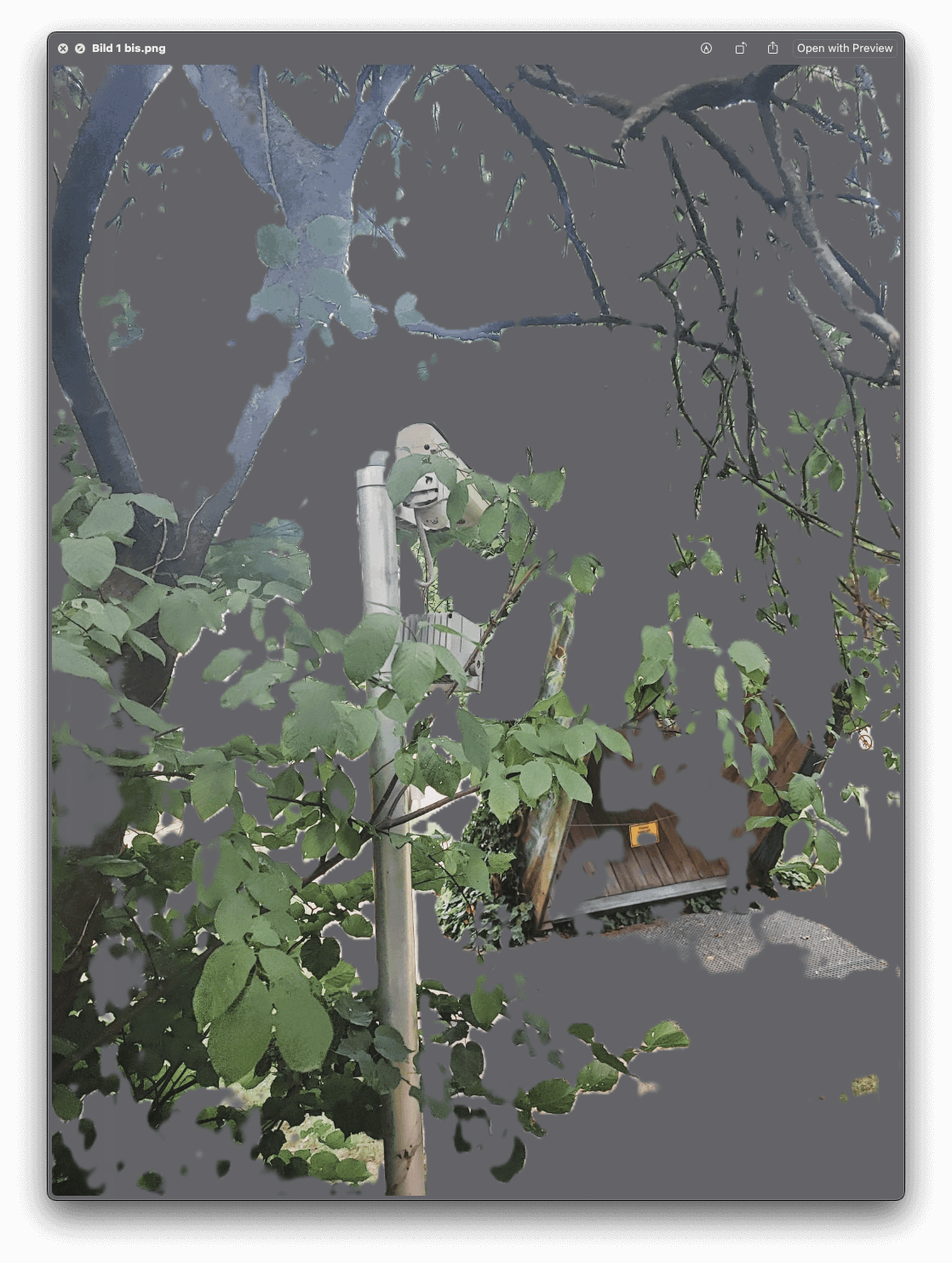
For a long time, a plate commemorated the patients of Gugging who were murdered or starved to death during the war. Removed in 2010, it was replaced by a freight container tilted on one end. Inside, a few small spheres are attached to the floor. A memorial. On and around it are signs forbidding dogs from peeing and us from stepping or climbing on the container. We are asked to keep off. A surveillance camera is perched in the foliage. In our collective memory are well-tended parks in affluent neighborhoods where no dogs, no picnics, no skateboards are allowed. The memorial.
On the Gugging grounds, those who were once surveilled under trained eyes and died are silent ghosts amassed in the darkness of a container. On this stage, the fragile aporia of remembrance where we put things together in the light of death. Up front, an erasure takes place: the no-signs stand there in their own bright yellow, the camera watching us – we, normalized, self-centered citizens. The container: a backdrop.
In Vienna, Alfred Hrdlicka’s Memorial Against War and Fascism includes the bronze Sculpture of a Kneeling, Street-washing Jew to commemorate this humiliation of Jewish citizens after the Anschluss. The artist placed barbed wire on the back of the kneeling figure to prevent viewers from sitting on it.
To remind us not to forget Gugging, there is a website. No sign of restriction appears in the photographs. There is also no camera. The artist is Dorothee Golz.
In 1940, the Gau Physician Leader Richard Eisenmenger informed the director of the Gugging psychiatric hospital that “measures to empty the wards had to be taken,” a “euphemistic statement” to signal the start of the Nazi Euthanasia Program (Czech 6): deportation, killings, starvation.
“On 12th November 1940 the first transport left Gugging. It included 70 people. Buses were used, which were accompanied by nurses and SA men. By the end of the year, 433 patients had been transported from Gugging in this way”; between March and May 1941 alone, “106 children and young people under the age of 15 were among the victims” (7).
“The highest annual mortality rate at Gugging, of 34.8%, was reached in 1943. Of a total of 1755 patients who were at the hospital during this period, 610 died by the end of the year” (23).
In the third district of Vienna, passers-by look up and admire the two golden globes on the roof of the PdBA. Remembrance takes place elsewhere, in the virtual cloud of a contemporary collection and its year-to-year update of new expressions. In Gugging, on top of the hill overlooking the excavated slopes where, from year to year, the science institute crawls up, is the former children’s pavilion of the psychiatric hospital. This is where today’s artists of Gugging create their wondrous works. They are representatives of Art Brut; they take their meds and prosper. Sometimes they walk to the bottom of the hill and sit by the pond under meaningless shadows. On the hill is their home, their fabulous lives, their sorrows, their friendships – there they stand.
__
Notes
Art Brut Center Gugging. https://www.gugging.org/
Czech, Herwig. “From ‘Action 4’ to ‘decentralized euthanasia’ in Lower Austria:
The psychiatric hospitals of Gugging, Mauer-Öhling and Ybbs.” ISTA Commemoration Lecture, 25 November 2014. www.memorialgugging.at
Memorial Gugging. www.memorialgugging.at
Morowitz, Laura. Art, Exhibition and Erasure in Nazi Vienna. London, UK: Routledge, 2024.