
Páneurópai Piknik
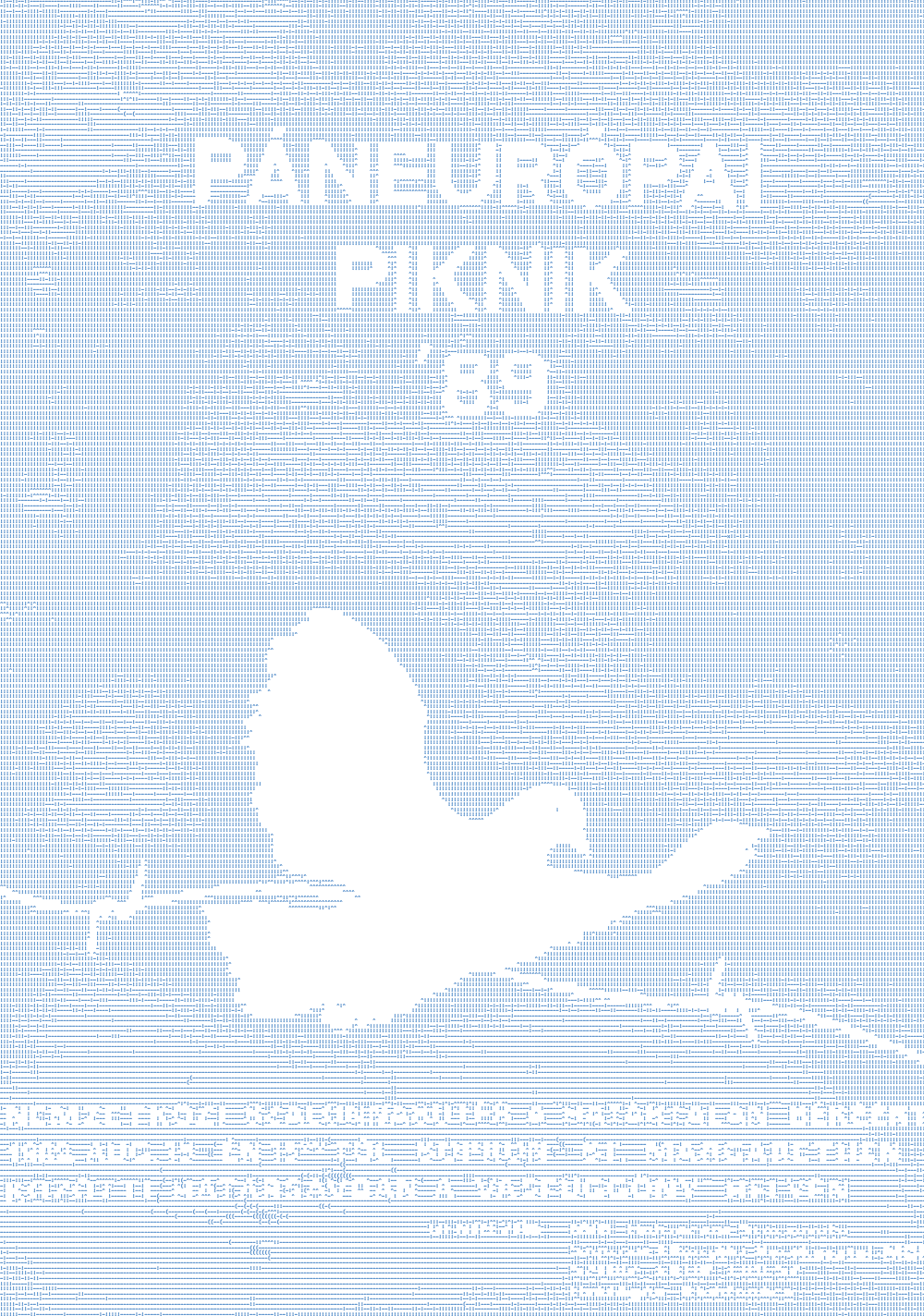
A poster advertising the pan-European picnic in 1989. ASCII Image to Text from original photograph by Attila Kisbenedek.
Scale: “life size”
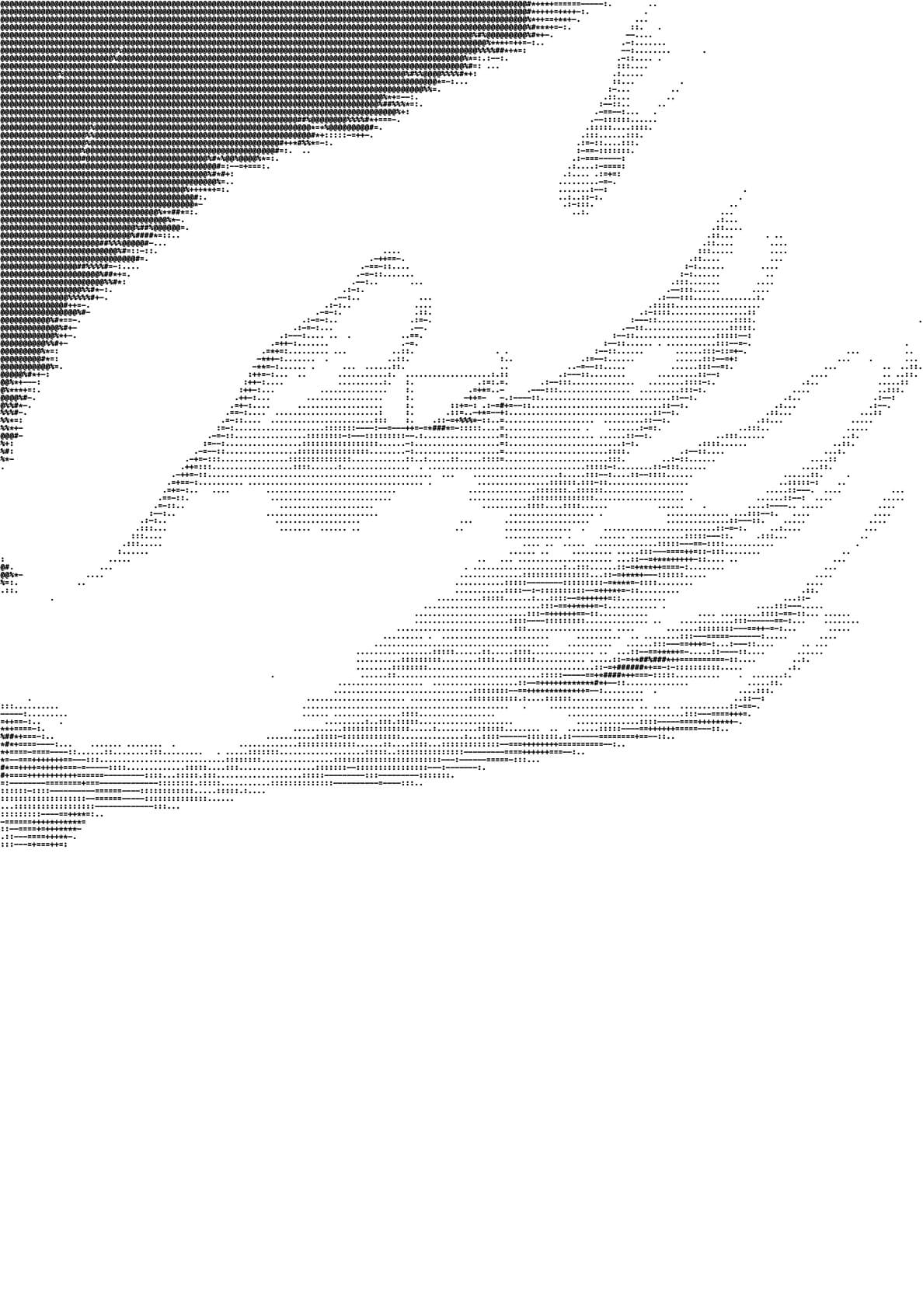
Excerpt from Kees Boeke's Cosmic View (1957). ASCII Image to Text from original drawing on page 37.


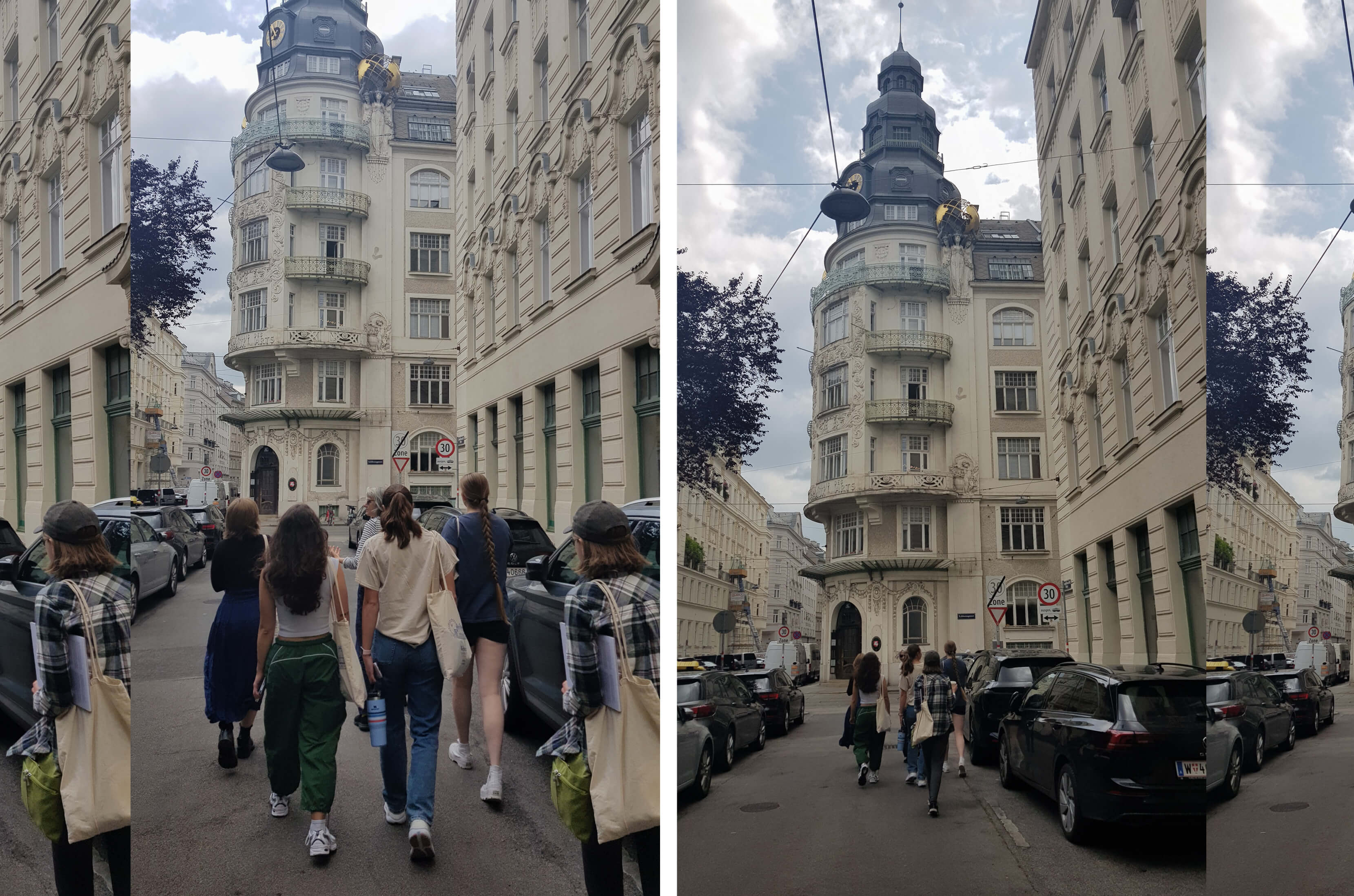
Across from the Palais des Beaux Arts building, on the opposite side of Löwengasse is Rudolf von Alt-Platz. Built between 1906 and 1911, the public square was given the name of the Austrian painter Rudolf von Alt, who died just one year before its construction started. The pseudo-public square is occupied by a lawn of patchy grass, a humble group of trees, an oval planter of roses, and is bookended by a row of trash bins. Passers-by are invited to use only a small amount of the square’s space, delineated by a line of concrete that separates the grass lawn in two. The majority of the green space is surrounded by an ankle-high iron fence. The question that is posed by the architecture is not one of access, but distribution of benefit.
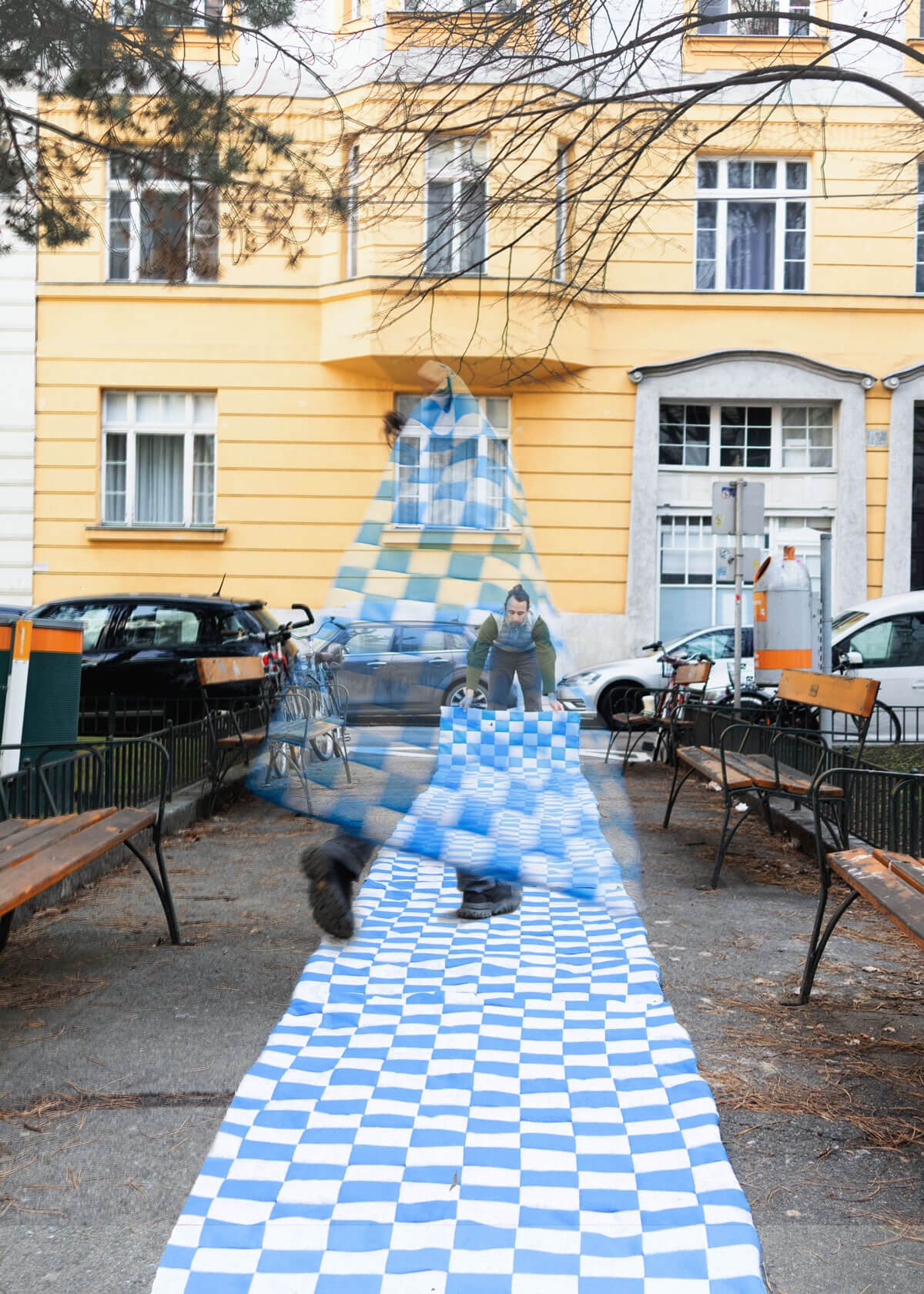
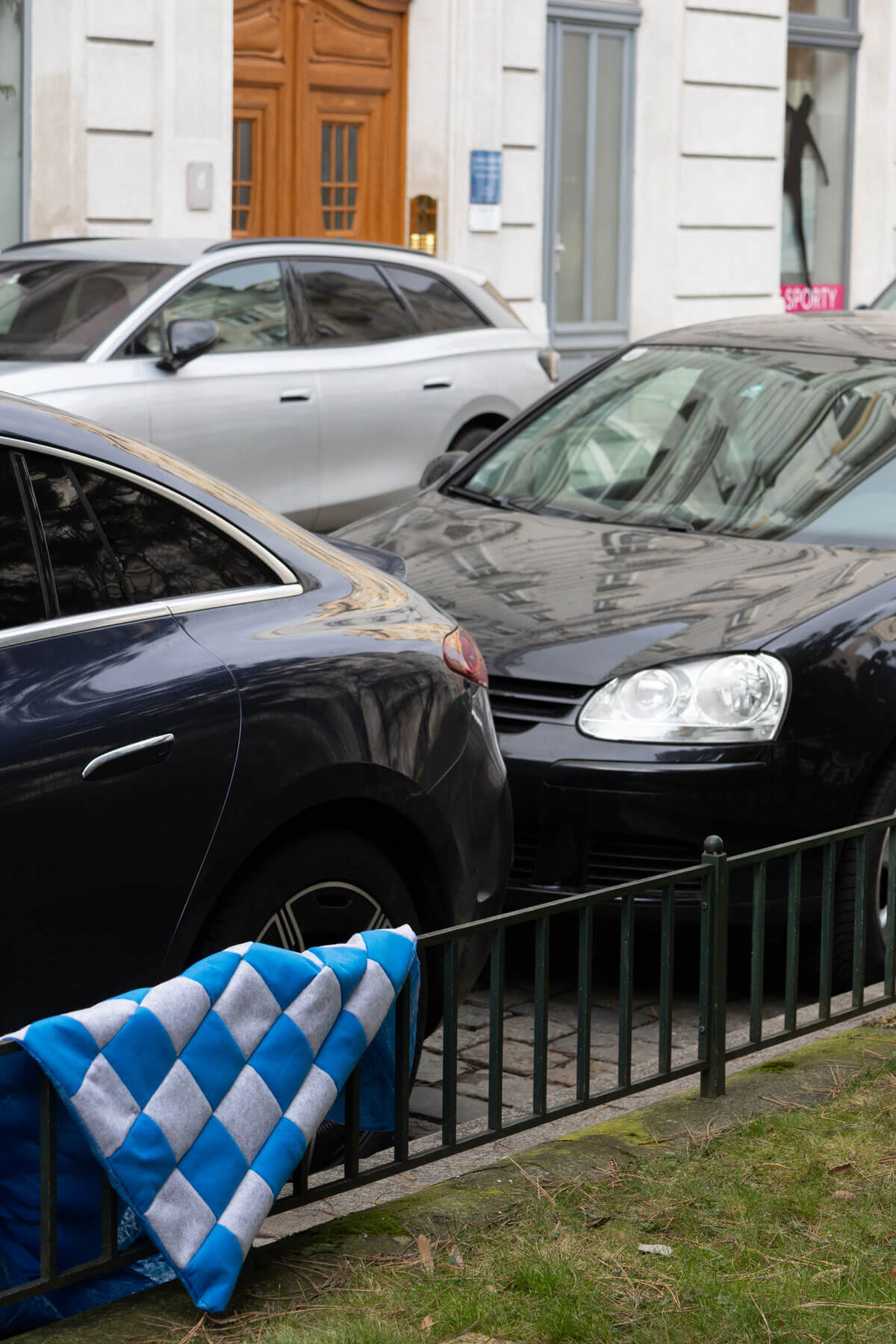
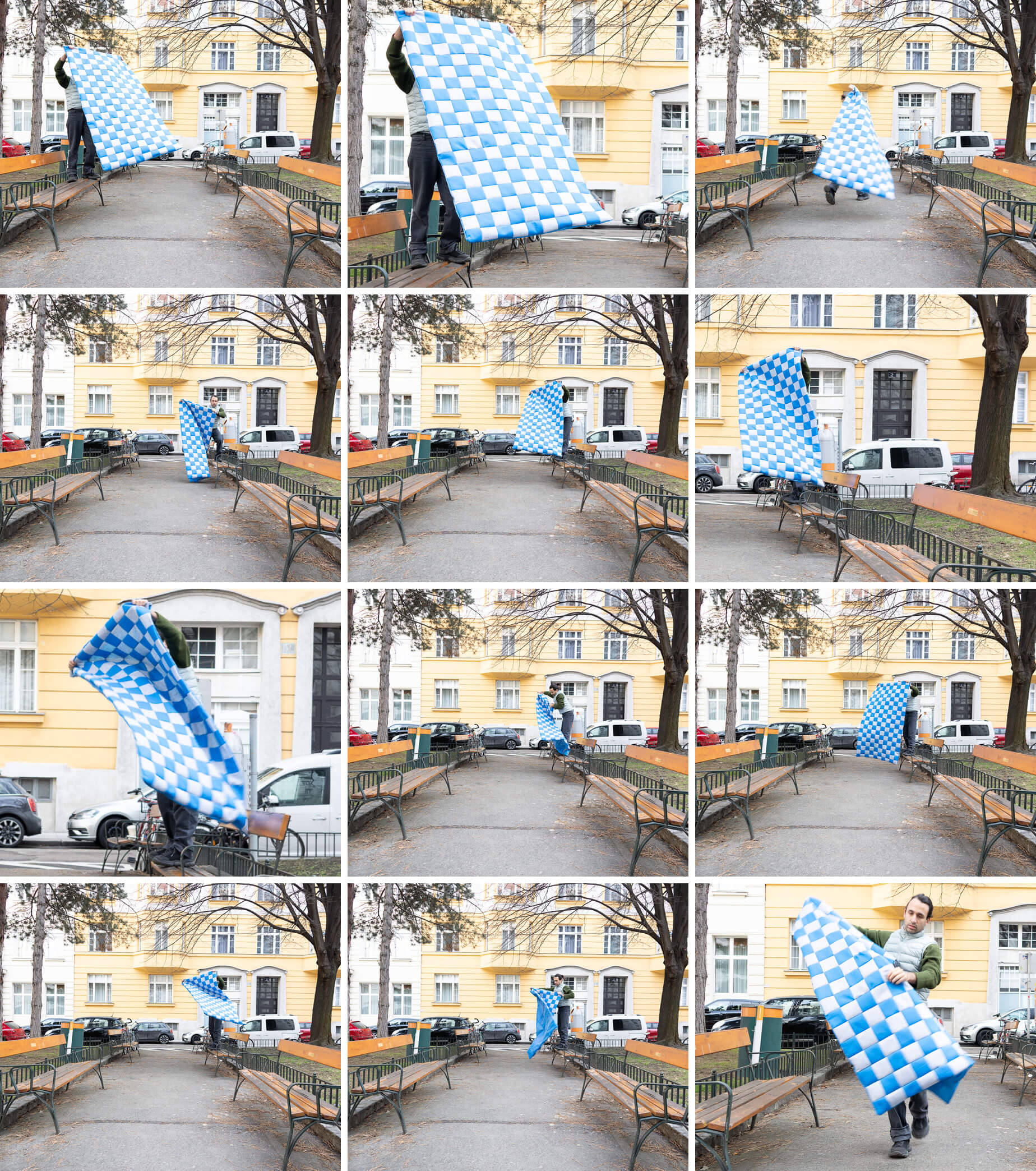
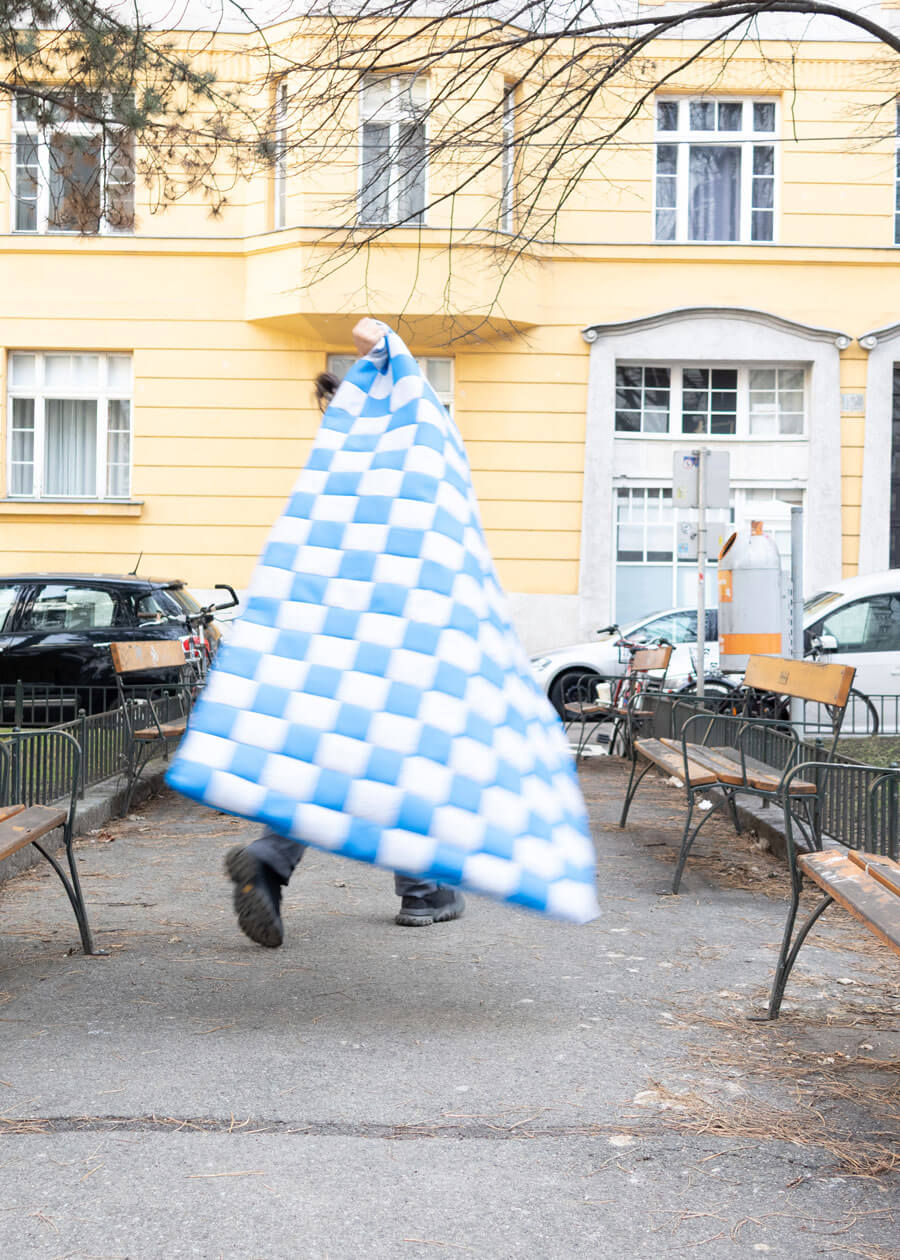
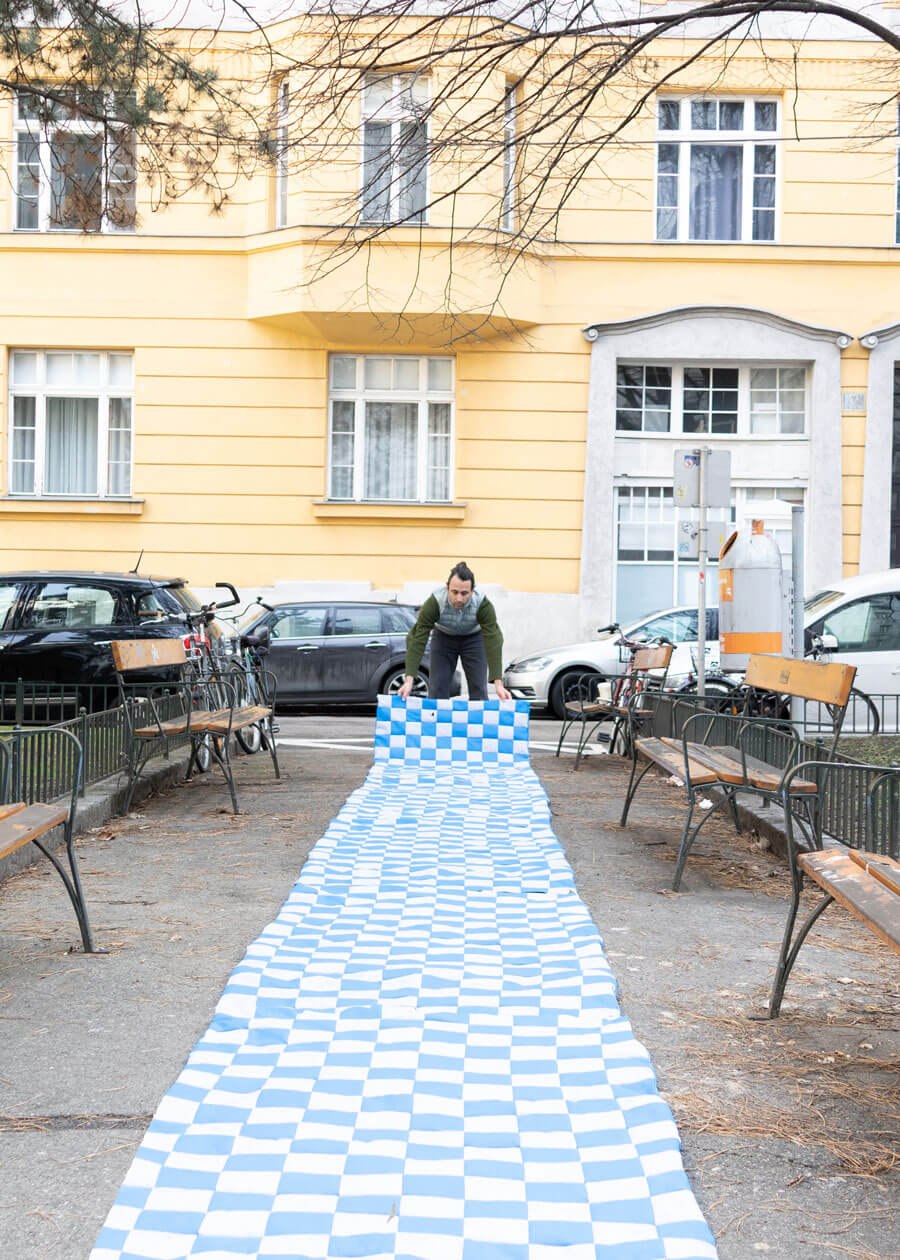
Animated by the last presentation of commissioned works at this very same site, artist Guilherme Maggessi deals with the picnic as social infrastructure and the picnic blanket as its form. The former is discussed at length in his essay “This text is a slippery experiment in both relation and scale, I say with a soft grin to my left cheek,” while the latter becomes a site-specific, modular soft-sculpture for the text’s performance and activation.
The picnic is as much a form of hosting as it is a strategy of exclusion – both of humans (invited guests) and non-humans (the ground plane, bugs, etc.). But as with many social infrastructures it also dwells in ambiguity. Engaging with the ambiguity between social infrastructures and culture-nature relations that are expressed in the design of Rudolf von Alt-Platz, Maggessi’s work shows how care and control may look identical.
Making promiscuous connections between pop-culture, philosophy, political history, and small town news, the artist invites the reader, the viewer, and the passer-by into a conversation about the neutrality of scale, repetition as a normalising tool, and the urban politics of maintenance.
Everyone is invited to the picnic.
Format - Soft Sculpture, Essay, PDF Zine
Material - Felt, Plastic, Pixels, Performance
Dimensions - Variable, 2m x 1m (x6), 7.56GB, 21.805 characters with spaces, 118 x 84cm
Artist - Guilherme Maggessi
Year - 2025
Artistic Director, Copy Editor- Seth Weiner
Documentation - Rafał Morusiewicz
The project is funded by the Kulturabteilung Stadt Wien (MA-7)

A Little History of the Wireless Icon (Eine kleine Geschichte des Wireless Icons) is an introduction into the iconographic history of wireless technologies.
English Version / German Version



with_BG%20Color_16%2002%2019_Moment_crop.jpg)






-Still-03.jpg)
-Still-01.jpg)



.jpeg)


